- English
- Español
- Português
- русский
- Français
- 日本語
- Deutsch
- tiếng Việt
- Italiano
- Nederlands
- ภาษาไทย
- Polski
- 한국어
- Svenska
- magyar
- Malay
- বাংলা ভাষার
- Dansk
- Suomi
- हिन्दी
- Pilipino
- Türkçe
- Gaeilge
- العربية
- Indonesia
- Norsk
- تمل
- český
- ελληνικά
- український
- Javanese
- فارسی
- தமிழ்
- తెలుగు
- नेपाली
- Burmese
- български
- ລາວ
- Latine
- Қазақша
- Euskal
- Azərbaycan
- Slovenský jazyk
- Македонски
- Lietuvos
- Eesti Keel
- Română
- Slovenski

How Can a CNC Servo-Motor Thread Rolling Machine Improve Precision, Productivity, and Thread Quality
Article Summary: A CNC Servo-Motor Thread Rolling Machine is designed for manufacturers that need accurate, repeatable, and efficient thread-forming performance. NERES provides the NRS-25NC/NRS-15NC series, featuring servo-driven roller shafts and feed movement, up to 30 tons of rolling pressure, and a thread diameter range of φ3–φ80 mm. This article explains its working advantages, technical specifications, applications, and key factors to consider when selecting a CNC thread rolling solution.
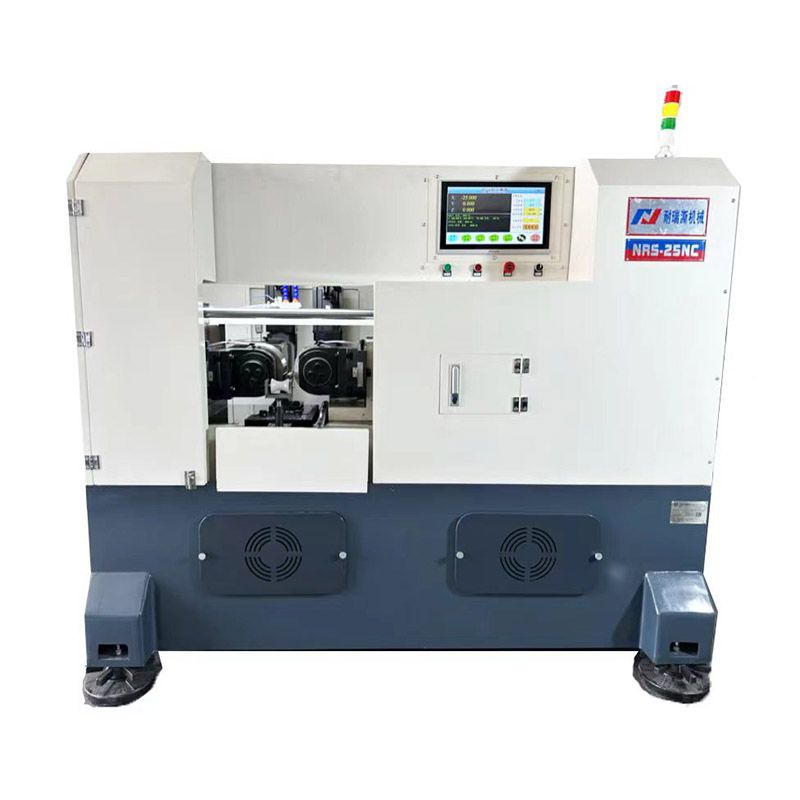
Table of Contents
- Why Is CNC Servo Technology Important in Thread Rolling?
- What Are the Key Features of a CNC Servo-Motor Thread Rolling Machine?
- What Are the Main Technical Specifications?
- What Applications Can It Handle?
- What Benefits Can Manufacturers Expect?
- How Should You Select the Right Thread Rolling Machine?
- Why Does Machine Configuration Matter for Production?
- Frequently Asked Questions
- Conclusion
Why Is CNC Servo Technology Important in Thread Rolling?
Thread rolling is a cold-forming process in which hardened dies apply pressure to a workpiece to create threads without cutting away the material. For manufacturers producing precision fasteners, shafts, screws, worm-related components, and other threaded parts, controlling roller movement and feed accurately is essential.
A CNC Servo-Motor Thread Rolling Machine improves this process by using servo motors to control the roller shafts and feed movement. According to NERES specifications, the two roller shafts are servo-driven, while the feed shaft also uses servo control. This configuration provides a more coordinated motion system for demanding thread-forming operations.
Compared with a basic mechanical setup, CNC servo control can make production parameters easier to manage and repeat. This is particularly valuable when manufacturers need stable dimensional performance across repeated production batches.
For buyers researching a CNC Servo-Motor Thread Rolling Machine, the most important considerations include workpiece dimensions, thread pitch, rolling pressure, spindle speed, die configuration, and the required production method.
What Are the Key Features of a CNC Servo-Motor Thread Rolling Machine?
The NERES NRS-25NC/NRS-15NC series combines servo drive technology with a rigid thread-forming structure. Its design is intended to accommodate both common triangular threads and a wider range of specialized tooth profiles, depending on the selected rolling dies and workpiece drawing.
- Servo motor drive: The roller shafts and feed movement are controlled through servo motors.
- High rolling force: Maximum rolling pressure reaches 30 tons.
- Broad workpiece range: Rolling thread outer diameters range from φ3 to φ80 mm.
- Flexible pitch capability: Thread pitches from 0.6 to 8.0 mm are supported within the stated specifications.
- Variable spindle speed: Spindle speed is adjustable from 10 to 60 RPM with stepless speed regulation.
- Multiple forming possibilities: Depending on the drawing and roller configuration, the machine can process worm teeth, trapezoidal teeth, ball screw-related profiles, knurling, and rolling grooves.
This combination makes the machine suitable for manufacturers looking for a flexible platform rather than equipment limited to one standard thread geometry.
What Are the Main Technical Specifications?
Technical specifications are critical when evaluating whether a machine is suitable for a particular production line. The following table summarizes the published specifications of the NERES CNC servo-motor model.
| Specification | Value |
|---|---|
| Model | NRS-25NC / NRS-15NC |
| Rolling thread outer diameter | φ3–φ80 mm |
| Rolling thread pitch | 0.6–8.0 mm |
| Spindle speed | 10–60 RPM, stepless regulation |
| Maximum roller outer diameter | φ210 mm |
| Maximum distance between spindles | 280 mm |
| Minimum distance between spindles | 180 mm |
| Maximum rolling pressure | 30 tons |
| Roller drive power | 11 kW |
| Feed propulsion power | 5.5 kW |
| Machine footprint | 2100 × 1600 × 2100 mm |
For in-feed rolling of commonly used 55° and 60° triangular threads, the published specification indicates workpieces up to φ80 mm in diameter, with a maximum pitch of 8.0 mm and maximum length of 150 mm. Thru-feed rolling is also available for commonly used 55° and 60° triangular threads with pitch up to 8.0 mm, subject to the appropriate setup.
What Applications Can It Handle?
One of the major advantages of servo-controlled thread rolling is its ability to support different forming requirements through appropriate die selection and machine configuration.
Typical processing possibilities include:
- 55° and 60° triangular threads
- Worm tooth profiles
- Trapezoidal tooth profiles
- Ball screw-related rolling applications
- Knurling operations
- Rolling grooves
- Other customized tooth shapes based on engineering drawings
The actual processing capability should always be confirmed against the workpiece drawing, material, required thread profile, die design, diameter, pitch, and production method. This is particularly important for specialized components where standard thread dimensions may not apply.
What Benefits Can Manufacturers Expect?
1. More Controlled Motion
Servo-driven roller shafts provide coordinated motion control. This can help manufacturers establish repeatable processing conditions when producing batches of similar components.
2. Flexible Production Parameters
The spindle speed range of 10–60 RPM with stepless regulation allows production parameters to be adjusted according to workpiece and forming requirements.
3. High Forming Capacity
With a maximum rolling pressure of 30 tons, the machine is designed for demanding cold-forming applications. The combination of rolling force and servo-controlled movement provides a foundation for stable production of appropriately sized threaded components.
4. Multiple Processing Options
Manufacturers do not necessarily need separate equipment for every type of tooth-forming operation. With suitable rollers and engineering validation, one platform can support various profiles, including threads, knurling, and rolling grooves.
5. Suitable for Industrial Production
The machine's substantial construction, 11 kW roller drive, 5.5 kW feed propulsion system, and approximately 2100 × 1600 × 2100 mm footprint make it suited to industrial production environments where equipment stability and repeatability are important.
How Should You Select the Right Thread Rolling Machine?
Choosing a machine based only on maximum pressure or motor power can result in an unsuitable configuration. A more reliable purchasing process begins with the actual component requirements.
- Define the workpiece diameter: Confirm the minimum and maximum blank diameter required for production.
- Confirm thread pitch: Compare the required pitch with the machine's supported range.
- Determine the rolling method: Decide whether in-feed or thru-feed rolling is appropriate.
- Check thread geometry: Standard triangular threads and specialized profiles may require different dies and configurations.
- Evaluate production volume: High-volume production may benefit more from CNC control and automated feeding integration.
- Review machine dimensions: Ensure sufficient workshop space for the machine, operator access, material handling, and maintenance.
- Discuss the drawing with the manufacturer: For non-standard components, technical confirmation before purchase can reduce configuration risks.
NERES positions itself as a China manufacturer and supplier of thread rolling machinery, thread rolling dies, thread tools, and related equipment. Its product portfolio also includes automatic CNC thread rolling machines and other thread-forming solutions.
Why Does Machine Configuration Matter for Production?
Thread rolling performance depends on more than the machine itself. The relationship between the machine, rolling dies, workpiece material, blank diameter, lubrication, thread geometry, and processing parameters determines the final result.
For example, the same machine may require different roller designs when switching from a conventional triangular thread to a specialized tooth profile. Similarly, changing workpiece material or thread pitch can require parameter adjustments.
A professional supplier should therefore evaluate the component drawing before recommending the final configuration. This engineering-oriented approach is especially useful for buyers sourcing customized thread rolling machinery from a China factory.
NERES states that its CNC thread rolling solutions can be customized according to customer requirements and provides technical support for selecting suitable equipment.
Frequently Asked Questions
What is a CNC Servo-Motor Thread Rolling Machine?
It is a CNC-controlled thread-forming machine that uses servo motors to drive the roller shafts and feed movement. The NERES NRS-25NC/NRS-15NC series is designed for thread rolling and other forming operations such as knurling and rolling grooves, depending on the roller configuration.
What thread diameter can the NERES machine process?
The published specification lists a rolling thread outer diameter range of φ3–φ80 mm, with a rolling thread pitch range of 0.6–8.0 mm.
What is the maximum rolling pressure?
The maximum stated rolling pressure is 30 tons. Actual processing conditions should be evaluated according to the workpiece, material, thread geometry, and rolling dies.
Can this machine process special tooth profiles?
Yes. According to the manufacturer, the machine can process worm teeth, trapezoidal teeth, ball screw-related profiles, knurling, rolling grooves, and other tooth shapes when the required configuration is determined from the workpiece drawing.
What should I provide when requesting a quotation?
For an accurate recommendation, buyers should provide the workpiece drawing, material, blank diameter, finished thread diameter, pitch, thread length, required production volume, and preferred rolling method. These details allow the supplier to evaluate machine configuration and suitable rolling dies more accurately.
Conclusion
A CNC Servo-Motor Thread Rolling Machine can be a valuable investment for manufacturers seeking controlled forming, repeatable processing, flexible thread production, and industrial-grade rolling capacity. The NERES NRS-25NC/NRS-15NC series supports φ3–φ80 mm rolling thread diameters, 0.6–8.0 mm pitches, stepless 10–60 RPM spindle speed, and up to 30 tons of rolling pressure.
If you are evaluating a machine for standard threads, specialized tooth profiles, knurling, or other precision forming requirements, the best approach is to match the machine configuration to your actual component drawing and production targets. Contact us with your workpiece specifications and production requirements to discuss a suitable CNC Servo-Motor Thread Rolling Machine solution from NERES.