- English
- Español
- Português
- русский
- Français
- 日本語
- Deutsch
- tiếng Việt
- Italiano
- Nederlands
- ภาษาไทย
- Polski
- 한국어
- Svenska
- magyar
- Malay
- বাংলা ভাষার
- Dansk
- Suomi
- हिन्दी
- Pilipino
- Türkçe
- Gaeilge
- العربية
- Indonesia
- Norsk
- تمل
- český
- ελληνικά
- український
- Javanese
- فارسی
- தமிழ்
- తెలుగు
- नेपाली
- Burmese
- български
- ລາວ
- Latine
- Қазақша
- Euskal
- Azərbaycan
- Slovenský jazyk
- Македонски
- Lietuvos
- Eesti Keel
- Română
- Slovenski

Why Is a Carbide Tap the Best Choice for High-Precision Threading Applications
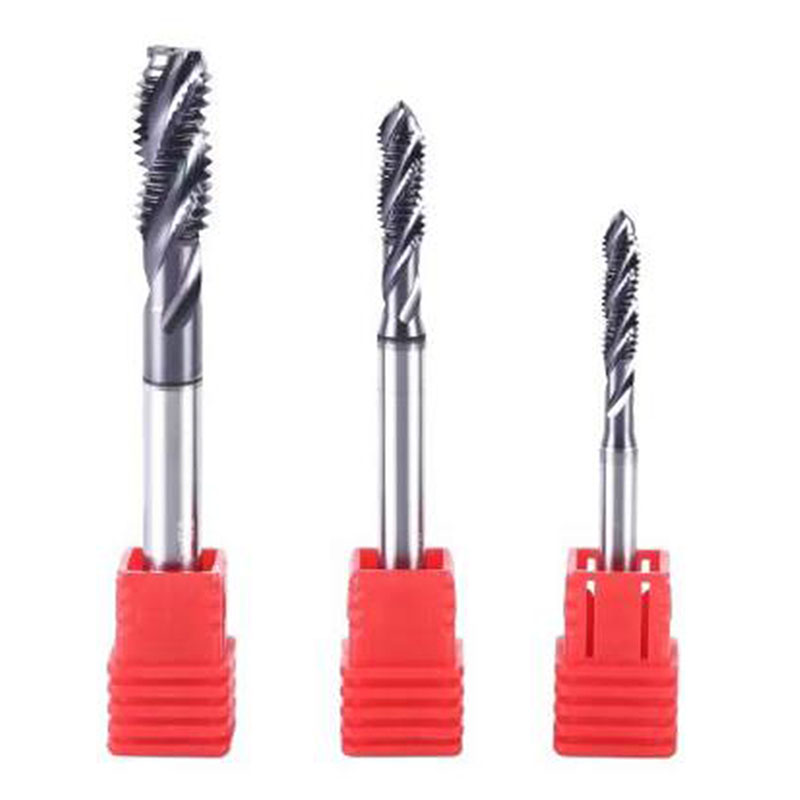
NERES specializes in manufacturing high-performance Carbide Tap solutions for demanding industries that require exceptional thread accuracy, wear resistance, and machining efficiency. Whether you're machining hardened steel, stainless steel, titanium alloys, or other difficult materials, selecting the right carbide tap can significantly improve productivity, reduce tool replacement costs, and ensure consistent thread quality throughout large production runs.
Choosing the right threading tool directly affects machining efficiency, thread quality, production cost, and overall manufacturing reliability. This guide explains everything manufacturers need to know about carbide taps, including their structure, advantages, applications, material selection, maintenance practices, and purchasing considerations. You'll also discover why more precision manufacturers are switching from conventional taps to carbide solutions for modern CNC machining.
Contents
- What Is a Carbide Tap?
- Why Choose a Carbide Tap?
- Which Materials Can Carbide Taps Machine?
- Carbide Tap vs HSS Tap
- How to Select the Right Carbide Tap
- Maintenance Tips
- Frequently Asked Questions
- Conclusion
What Is a Carbide Tap?
A Carbide Tap is a precision cutting tool designed to produce internal threads with exceptional dimensional accuracy. Unlike traditional high-speed steel (HSS) taps, carbide taps are manufactured using ultra-hard tungsten carbide, providing significantly higher hardness, wear resistance, and rigidity.
These tools are commonly used in CNC machining centers, automated production lines, and precision manufacturing environments where consistency and long tool life are essential. Their superior material properties allow them to maintain cutting performance even under high-speed machining conditions.
Because carbide possesses excellent compressive strength and thermal stability, carbide taps generate cleaner thread profiles while minimizing deformation during machining.
Why Choose a Carbide Tap?
Manufacturers increasingly prefer carbide taps because they deliver measurable improvements in production efficiency and product quality.
- Excellent wear resistance for extended tool life.
- Higher cutting speeds increase production capacity.
- Superior dimensional accuracy and thread consistency.
- Reduced vibration during machining.
- Outstanding performance on hardened materials.
- Lower overall tooling costs despite higher initial investment.
- Suitable for unattended CNC production.
Modern carbide grades combined with advanced coatings enable these tools to operate under demanding machining conditions while maintaining stable cutting performance throughout long production cycles.
Which Materials Can Carbide Taps Machine?
One of the biggest advantages of carbide taps is their versatility across a wide variety of engineering materials. Selecting the appropriate geometry and coating further enhances machining performance for specific workpiece materials.
| Material | Machining Performance | Recommended |
|---|---|---|
| Carbon Steel | Excellent thread finish | ★★★★★ |
| Alloy Steel | High dimensional stability | ★★★★★ |
| Stainless Steel | Reduced built-up edge | ★★★★★ |
| Cast Iron | Stable cutting performance | ★★★★★ |
| Titanium Alloy | Excellent heat resistance | ★★★★☆ |
| Nickel-Based Alloy | Outstanding wear resistance | ★★★★☆ |
| Hardened Steel | Superior rigidity | ★★★★★ |
Selecting the correct carbide grade, flute design, and coating ensures maximum performance across different machining applications.
Carbide Tap vs HSS Tap
Although HSS taps remain widely used, carbide taps provide considerable advantages in high-volume and precision manufacturing environments.
| Feature | Carbide Tap | HSS Tap |
|---|---|---|
| Hardness | Very High | Medium |
| Wear Resistance | Excellent | Good |
| Cutting Speed | High | Moderate |
| Tool Life | Long | Shorter |
| Precision | Outstanding | Good |
| Mass Production | Ideal | Acceptable |
For manufacturers focused on automation, repeatability, and reduced downtime, carbide taps usually provide the best long-term return on investment despite their higher initial purchase cost.
How to Select the Right Carbide Tap
Selecting the appropriate Carbide Tap is essential for achieving stable machining performance and maximizing tool life. A tap that matches the workpiece material, machine capability, coolant strategy, and thread specification will consistently produce high-quality threads while minimizing the risk of breakage or rework.
Professional manufacturers such as NERES offer a wide range of carbide taps designed for different threading conditions, helping customers optimize machining efficiency across various industries.
Consider the Workpiece Material
Different materials generate different cutting forces and chip characteristics. Carbon steel, alloy steel, stainless steel, cast iron, titanium alloys, and nickel-based alloys each require specific flute geometries and cutting edge designs. Selecting a carbide tap designed for the target material improves chip evacuation and extends service life.
Choose the Correct Thread Standard
- Metric threads (M)
- UNC/UNF threads
- Pipe threads
- Fine pitch threads
- Custom thread profiles
Ensuring compatibility between the tap and the thread specification helps maintain dimensional accuracy while reducing secondary finishing operations.
Select the Proper Flute Design
Flute geometry directly influences chip removal and machining stability.
- Straight flute: Ideal for blind holes in cast iron and short-chip materials.
- Spiral flute: Efficiently evacuates chips from blind holes.
- Spiral point: Pushes chips forward, making it suitable for through holes.
Evaluate Machine Rigidity
Carbide is significantly harder than conventional tool steel but also less forgiving under excessive vibration. A rigid CNC machining center with precise spindle alignment helps maximize the performance advantages of carbide tooling.
Where Are Carbide Taps Commonly Used?
As manufacturing technologies continue to evolve, carbide taps have become indispensable across numerous industries where thread precision and production efficiency are critical.
- Aerospace structural components
- Automotive engine and transmission parts
- Medical device manufacturing
- Energy equipment
- Hydraulic and pneumatic systems
- Mold and die manufacturing
- Industrial automation equipment
- Precision mechanical components
- Electronics manufacturing
- Heavy machinery production
These industries often require tight tolerances, repeatable quality, and uninterrupted production. Carbide taps provide the durability needed to maintain consistent performance throughout extended machining cycles.
Common Threading Challenges and Solutions
Even high-quality tooling can experience problems if machining parameters are not optimized. Understanding common issues allows manufacturers to improve productivity and reduce scrap rates.
| Problem | Possible Cause | Recommended Solution |
|---|---|---|
| Tap Breakage | Poor alignment or excessive feed | Improve machine rigidity and optimize cutting parameters |
| Poor Thread Finish | Worn cutting edges | Replace worn tools and inspect coatings |
| Chip Clogging | Incorrect flute geometry | Select spiral flute or spiral point designs |
| Short Tool Life | Improper coolant or excessive speed | Adjust coolant delivery and machining parameters |
| Oversized Threads | Machine vibration | Increase fixture stability and reduce runout |
Maintenance Tips for Longer Tool Life
Proper maintenance helps maximize the return on investment of every carbide tap. While carbide tools offer exceptional wear resistance, following best practices significantly extends their usable life.
- Inspect cutting edges regularly for wear or chipping.
- Use the recommended cutting speed and feed rate.
- Apply sufficient coolant or lubrication during threading.
- Store taps individually to prevent edge damage.
- Keep machine spindles accurately aligned.
- Replace damaged holders immediately.
- Clean chips from the work area after each machining cycle.
- Monitor tool life using CNC tool management systems.
Routine inspection and preventive maintenance reduce unexpected downtime while maintaining excellent thread quality throughout production.
Frequently Asked Questions
1. What is the main advantage of a Carbide Tap compared with an HSS tap?
The primary advantage is superior hardness and wear resistance. A carbide tap can maintain cutting performance much longer than an HSS tap, especially when machining hard materials and performing high-volume production.
2. Can carbide taps be used on stainless steel?
Yes. Carbide taps are widely used for stainless steel because they offer excellent heat resistance, reduced built-up edge formation, and improved thread consistency.
3. Are carbide taps suitable for CNC machining centers?
Absolutely. Carbide taps are specifically designed to perform efficiently in modern CNC machining environments where precision, speed, and repeatability are critical.
4. How long does a carbide tap typically last?
Tool life depends on the workpiece material, cutting parameters, coolant conditions, and machine rigidity. However, carbide taps generally last significantly longer than conventional HSS taps under comparable conditions.
5. What industries benefit most from carbide taps?
Industries such as aerospace, automotive, medical device manufacturing, energy equipment, mold making, and industrial automation benefit greatly from carbide tap technology because of their strict quality and productivity requirements.
6. How can I maximize carbide tap performance?
Use the correct tap geometry, maintain proper spindle alignment, optimize cutting speeds and feeds, provide adequate coolant, and regularly inspect tooling conditions.
Conclusion
As manufacturing standards continue to rise, investing in advanced threading solutions becomes increasingly important. A high-quality Carbide Tap delivers exceptional precision, outstanding wear resistance, longer service life, and greater productivity across a wide range of materials and machining environments. From aerospace components to automotive systems and precision industrial equipment, carbide taps help manufacturers achieve reliable and repeatable threading results while reducing overall production costs.
When selecting a trusted carbide tooling supplier, experience, engineering expertise, product consistency, and technical support all matter. NERES is committed to providing high-performance carbide threading solutions designed to meet the demanding requirements of modern manufacturing. Whether you need standard specifications or customized tooling solutions, our team is ready to help improve your machining efficiency and thread quality. If you are looking for reliable carbide tap products and professional technical support, contact us today to discuss your application requirements and discover the ideal solution for your production needs.