- English
- Español
- Português
- русский
- Français
- 日本語
- Deutsch
- tiếng Việt
- Italiano
- Nederlands
- ภาษาไทย
- Polski
- 한국어
- Svenska
- magyar
- Malay
- বাংলা ভাষার
- Dansk
- Suomi
- हिन्दी
- Pilipino
- Türkçe
- Gaeilge
- العربية
- Indonesia
- Norsk
- تمل
- český
- ελληνικά
- український
- Javanese
- فارسی
- தமிழ்
- తెలుగు
- नेपाली
- Burmese
- български
- ລາວ
- Latine
- Қазақша
- Euskal
- Azərbaycan
- Slovenský jazyk
- Македонски
- Lietuvos
- Eesti Keel
- Română
- Slovenski

Can a Thread Rolling Machine For Ball Screw Revolutionize Precision Manufacturing and Production Efficiency
In modern precision engineering, the demand for highly accurate, durable, and efficient ball screw components continues to grow across industries such as CNC machinery, robotics, aerospace, automotive manufacturing, and automation systems. As a leading manufacturer in thread rolling technology, NERES provides advanced Thread Rolling Machine For Ball Screw solutions designed to improve thread accuracy, increase productivity, reduce material waste, and enhance overall manufacturing efficiency.
This article explores how thread rolling machines work, their advantages over traditional machining methods, key technical features, application industries, selection criteria, maintenance requirements, and future industry trends. Whether you are looking to optimize your production line or invest in advanced manufacturing equipment, this guide offers valuable insights into thread rolling technology.
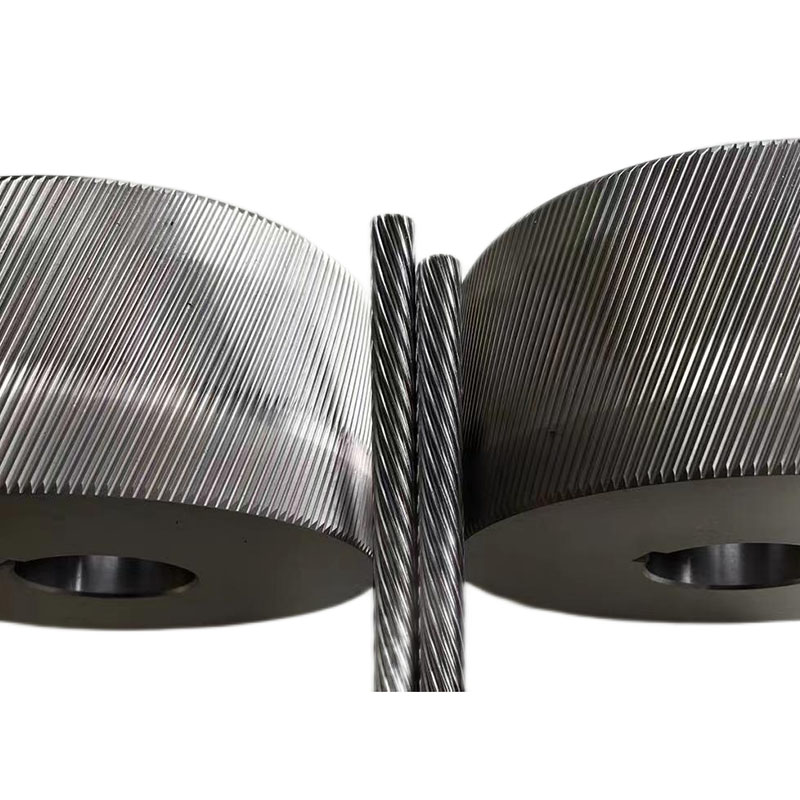
Table of Contents
What Is a Thread Rolling Machine For Ball Screw?
How Does the Machine Work?
Major Advantages of Thread Rolling Technology
Key Features of Modern Machines
Thread Rolling vs Traditional Thread Cutting
Industry Applications
How to Choose the Right Machine
Maintenance Best Practices
Future Trends in Ball Screw Manufacturing
Frequently Asked Questions
Conclusion
What Is a Thread Rolling Machine For Ball Screw?
A Thread Rolling Machine For Ball Screw is specialized equipment used to manufacture high-precision screw threads through a cold-forming process rather than material removal. The machine applies controlled pressure using hardened rolling dies to plastically deform the workpiece surface, creating precise thread profiles required for ball screw assemblies.
Ball screws are critical motion transmission components that convert rotational motion into linear movement with minimal friction and exceptional positioning accuracy. Because performance depends heavily on thread precision, manufacturers increasingly prefer thread rolling technology for producing consistent and reliable ball screw threads.
Compared with conventional cutting methods, thread rolling produces stronger threads, smoother surface finishes, and superior dimensional consistency while maintaining high production efficiency.
How Does the Machine Work?
The operating principle of a Thread Rolling Machine For Ball Screw is based on cold plastic deformation. Instead of cutting material away, rolling dies compress and shape the metal surface into the desired thread form.
Basic Process Steps
- Loading the prepared workpiece into the machine.
- Positioning and alignment through precision fixtures.
- Application of controlled rolling pressure.
- Formation of thread geometry by rolling dies.
- Automatic inspection or measurement.
- Finished ball screw removal.
During rolling, the grain flow of the material follows the thread profile, creating a stronger and more fatigue-resistant structure than machined threads.
Major Advantages of Thread Rolling Technology
Manufacturers increasingly adopt thread rolling because it delivers significant operational and economic benefits.
1. Superior Thread Strength
Thread rolling preserves material continuity and improves grain flow, increasing fatigue resistance and load-bearing capacity.
2. Exceptional Surface Finish
Rolled threads typically exhibit smoother surfaces, reducing friction and improving ball circulation performance in ball screw assemblies.
3. Higher Production Efficiency
The rolling process is significantly faster than conventional thread cutting operations, allowing manufacturers to achieve higher throughput.
4. Reduced Material Waste
Since no chips are removed, material utilization is optimized, lowering raw material costs.
5. Improved Dimensional Accuracy
Advanced control systems ensure consistent thread geometry and repeatable manufacturing quality.
6. Longer Component Life
The cold-working effect strengthens the thread surface, improving wear resistance and extending service life.
Key Features of Modern Machines
Modern Thread Rolling Machine For Ball Screw systems incorporate intelligent technologies that enhance productivity and precision.
| Feature | Function | Benefit |
|---|---|---|
| CNC Control System | Automated parameter adjustment | Improved precision and repeatability |
| Servo Drive Technology | Accurate positioning control | Enhanced thread consistency |
| High-Rigidity Frame | Minimizes vibration | Better machining stability |
| Automatic Feeding System | Continuous production | Higher efficiency |
| Real-Time Monitoring | Production data collection | Reduced downtime |
| Precision Rolling Dies | Thread profile generation | Superior surface quality |
These innovations help manufacturers meet increasingly demanding quality standards while reducing labor costs.
Thread Rolling vs Traditional Thread Cutting
Understanding the differences between thread rolling and traditional machining methods helps manufacturers make informed investment decisions.
| Criteria | Thread Rolling | Thread Cutting |
|---|---|---|
| Material Removal | No | Yes |
| Surface Finish | Excellent | Moderate |
| Thread Strength | Higher | Lower |
| Production Speed | Fast | Slower |
| Material Utilization | High | Lower |
| Tool Life | Long | Moderate |
| Operating Cost | Lower Long-Term | Higher Long-Term |
For high-volume production environments, thread rolling typically offers a more cost-effective and efficient solution.
Industry Applications
Thread Rolling Machine For Ball Screw technology supports a wide range of industrial sectors.
CNC Machine Tools
Ball screws are essential for precision positioning and motion control in CNC machining centers and lathes.
Industrial Robotics
Robotic systems require accurate linear motion components for repeatable and reliable operation.
Aerospace Manufacturing
High-performance ball screws contribute to critical aerospace systems where reliability and precision are mandatory.
Automotive Production
Automotive manufacturers utilize ball screws in automated assembly lines and precision equipment.
Medical Equipment
Diagnostic and surgical devices rely on smooth and precise linear motion systems.
Semiconductor Industry
Advanced manufacturing equipment demands micron-level positioning accuracy achieved through premium ball screw systems.
How to Choose the Right Machine
Selecting the appropriate Thread Rolling Machine For Ball Screw requires careful evaluation of production requirements.
Production Volume
Determine whether the machine will support low-volume custom manufacturing or large-scale automated production.
Thread Specifications
- Thread diameter range
- Lead accuracy requirements
- Pitch configurations
- Workpiece length
Automation Level
Evaluate whether manual, semi-automatic, or fully automatic operation best matches your production goals.
Machine Rigidity
A rigid structure ensures stable performance and consistent thread quality during long production cycles.
Control System
Advanced CNC controls provide greater flexibility, process monitoring, and repeatability.
Supplier Expertise
Choose experienced manufacturers with proven technology, engineering support, and reliable after-sales service.
Maintenance Best Practices
Regular maintenance is critical for maximizing equipment lifespan and ensuring consistent thread quality.
Daily Maintenance
- Clean machine surfaces.
- Check lubrication systems.
- Inspect rolling dies.
- Monitor hydraulic pressure.
Weekly Maintenance
- Verify alignment accuracy.
- Inspect electrical connections.
- Examine safety devices.
- Check coolant systems.
Monthly Maintenance
- Calibrate measuring systems.
- Inspect servo drives.
- Evaluate die wear conditions.
- Review machine performance reports.
Preventive maintenance significantly reduces unexpected downtime and protects manufacturing investments.
Future Trends in Ball Screw Manufacturing
As Industry 4.0 technologies continue to evolve, thread rolling machines are becoming increasingly intelligent and connected.
Smart Manufacturing Integration
Modern systems are integrating IoT sensors, cloud monitoring, and predictive maintenance capabilities.
AI-Assisted Process Optimization
Artificial intelligence can automatically adjust rolling parameters to maximize efficiency and product quality.
Enhanced Automation
Robotic loading and unloading systems are reducing labor requirements while increasing productivity.
Sustainability Improvements
Energy-efficient designs and reduced material waste support environmentally responsible manufacturing practices.
Ultra-Precision Manufacturing
Demand for higher positioning accuracy in advanced automation systems will continue driving innovation in ball screw production technologies.
Frequently Asked Questions
1. What is the primary advantage of a Thread Rolling Machine For Ball Screw?
The primary advantage is the ability to produce stronger, smoother, and more accurate threads without removing material, resulting in improved component performance and longer service life.
2. Is thread rolling suitable for high-volume manufacturing?
Yes. Thread rolling is widely recognized as one of the most efficient methods for large-scale production due to its speed and consistency.
3. How does thread rolling improve ball screw quality?
The rolling process enhances surface finish, increases thread strength, and maintains precise thread geometry, all of which contribute to better ball screw performance.
4. What industries commonly use ball screw thread rolling machines?
Industries include CNC machinery, robotics, aerospace, automotive manufacturing, semiconductor production, and medical equipment manufacturing.
5. Can modern machines support automation?
Yes. Many advanced systems feature CNC controls, automatic feeding systems, robotic integration, and real-time production monitoring.
6. How often should rolling dies be inspected?
Inspection frequency depends on production volume, but daily visual checks and scheduled preventive maintenance are recommended to maintain thread quality.
Conclusion
A Thread Rolling Machine For Ball Screw has become an essential asset for manufacturers seeking superior thread quality, higher productivity, and lower operational costs. By utilizing advanced cold-forming technology, these machines deliver stronger threads, exceptional surface finishes, and outstanding dimensional accuracy that meet the demanding requirements of modern industrial applications. As manufacturing continues moving toward intelligent automation and precision engineering, thread rolling technology will play an increasingly important role in shaping the future of ball screw production.
To learn more about advanced Thread Rolling Machine For Ball Screw solutions and discover how NERES can help optimize your manufacturing operations, contact us today. Our experienced team is ready to provide customized recommendations, technical support, and reliable equipment solutions that help your business achieve higher productivity, superior quality, and long-term competitive advantages.