- English
- Español
- Português
- русский
- Français
- 日本語
- Deutsch
- tiếng Việt
- Italiano
- Nederlands
- ภาษาไทย
- Polski
- 한국어
- Svenska
- magyar
- Malay
- বাংলা ভাষার
- Dansk
- Suomi
- हिन्दी
- Pilipino
- Türkçe
- Gaeilge
- العربية
- Indonesia
- Norsk
- تمل
- český
- ελληνικά
- український
- Javanese
- فارسی
- தமிழ்
- తెలుగు
- नेपाली
- Burmese
- български
- ລາວ
- Latine
- Қазақша
- Euskal
- Azərbaycan
- Slovenský jazyk
- Македонски
- Lietuvos
- Eesti Keel
- Română
- Slovenski

Why Does the Right Thread Rolling Machine Matter More Than Most Buyers Expect?
Article Summary
Choosing a thread rolling machine is not simply about buying equipment that can form threads. It is about protecting dimensional consistency, reducing scrap, controlling labor costs, shortening setup time, and making sure every threaded part performs reliably in real production. In this article, I walk through the practical questions buyers usually struggle with: when a thread rolling machine is better than cutting, how to match machine type to product range, what technical details affect output quality, and which common purchasing mistakes create hidden costs later. I also explain how DONGGUAN NERES HARDWARE MACHINERY CO.,LTD. fits into this conversation as a manufacturer focused on thread rolling equipment and related tooling solutions. If you are comparing options for bolts, screws, rods, tubes, special profiles, or customized threaded parts, this guide is written to help you make a more confident decision.
Table of Contents
- What Will This Article Cover?
- Why Do Buyers Struggle When Choosing a Thread Rolling Machine?
- What Makes a Thread Rolling Machine Different From Traditional Thread Cutting?
- Which Type of Thread Rolling Machine Fits Different Production Needs?
- How Should I Evaluate a Thread Rolling Machine Before Buying?
- What Mistakes Cause the Most Expensive Problems Later?
- How Can I Compare Machine Options More Clearly?
- What Does a Smarter Buying Workflow Look Like?
- What Questions Do Buyers Ask Most Often?
- Why Is Long-Term Fit More Important Than a Low Initial Price?
Outline
- The most common pain points faced by industrial buyers
- The practical advantages of thread rolling over cutting for many applications
- The difference between hydraulic, CNC, mechanical, and specialized machine choices
- The key technical and commercial factors that should guide purchasing
- The hidden mistakes that often raise costs after installation
- A clear comparison framework for shortlisting suppliers and models
- A useful FAQ section for real-world decision making
Why Do Buyers Struggle When Choosing a Thread Rolling Machine?
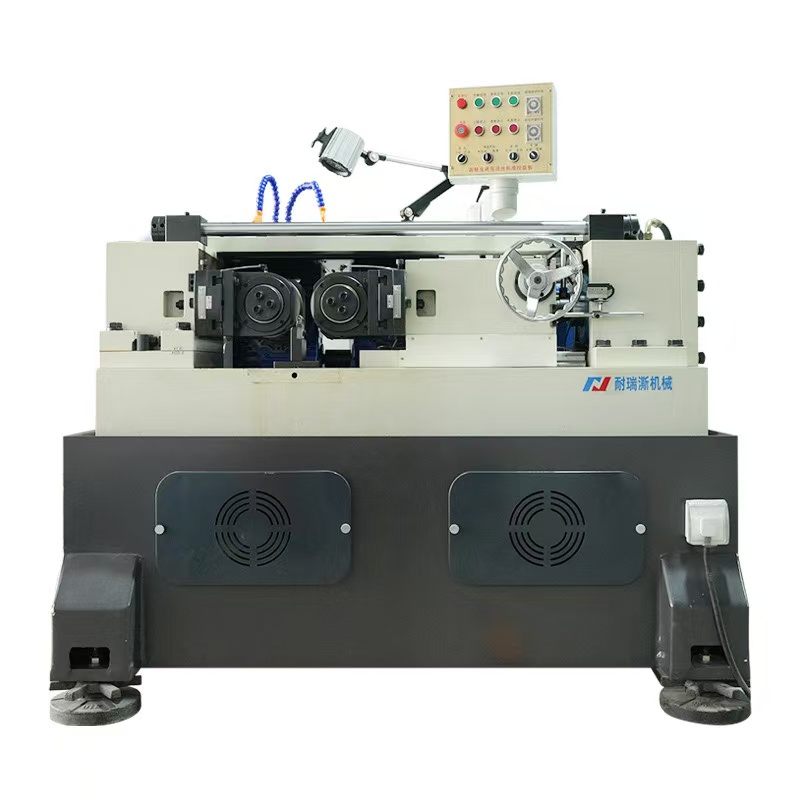
I see the same problem again and again: buyers know they need better thread quality or higher production efficiency, but they are not always sure which machine configuration will actually solve the issue. On paper, many machines look similar. In daily production, they do not behave the same at all.
Some buyers are replacing manual or older equipment. Others are expanding into new product sizes, new materials, or export-grade tolerances. In both cases, the real pain point is rarely the machine alone. It is the uncertainty around output stability, tooling compatibility, worker learning curve, and return on investment.
A thread that looks acceptable on the first sample may fail under batch pressure. A fast machine may not stay stable on harder materials. A low-price offer may exclude the feeder, dies, oil system, or service support that keeps the line running. That is exactly why the conversation around a Thread Rolling Machine has to go deeper than headline specifications.
Typical buyer concerns include:
- Inconsistent thread accuracy across long production runs
- Low output caused by slow loading and frequent adjustment
- High scrap rates when changing dimensions or materials
- Difficulty processing special profiles beyond standard threads
- Uncertainty about maintenance, tooling life, and operator training
- Fear of buying a machine that is either oversized or too limited
What Makes a Thread Rolling Machine Different From Traditional Thread Cutting?
The difference matters because many buyers still compare thread rolling to machining as if they are interchangeable. They are not. In many applications, thread rolling forms the material rather than removing it. That changes both productivity and part performance.
When a Thread Rolling Machine is properly matched to the workpiece, it can support higher efficiency, better surface finish, and stronger thread characteristics. Instead of producing chips, the process displaces material into the thread profile. That often means cleaner production and less waste handling. It can also support better consistency once the process is stabilized.
For buyers producing fasteners, threaded rods, automotive parts, fittings, bicycle components, hardware accessories, or special connection parts, the gain is not just speed. It is repeatability. And repeatability is what protects customer trust.
| Comparison Point | Thread Rolling | Traditional Thread Cutting |
|---|---|---|
| Material handling | Forms the material through pressure | Removes material through cutting |
| Chip generation | Minimal or none | Produces chips that require removal |
| Production efficiency | Usually better for large-volume repetitive work | Often slower for mass production |
| Surface finish | Often smoother when process is optimized | Depends heavily on tool condition and cutting parameters |
| Best fit | Fasteners, rods, shafts, tubes, special formed threads | Lower-volume or highly specific cutting scenarios |
That does not mean every part belongs on a rolling line. But for many manufacturers, switching to the right Thread Rolling Machine is exactly how they reduce unit cost without compromising quality.
Which Type of Thread Rolling Machine Fits Different Production Needs?
This is where many purchasing decisions go wrong. Buyers often ask for a price before they define the actual production target. A better question is: what kind of workpiece, throughput, flexibility, and automation level do I really need?
Different machine styles serve different priorities. A hydraulic model may appeal to buyers who want stable pressure and versatile operation. A CNC servo-based solution may be better when precision, programmability, and product variation matter more. Mechanical designs can still be relevant where structure, speed, and process familiarity fit the factory environment. Specialized options such as multi-die or tube-focused machines make sense when the product geometry demands them.
DONGGUAN NERES HARDWARE MACHINERY CO.,LTD. presents several categories around thread rolling equipment, including hydraulic, CNC servo-motor, mechanical, and more specialized variants, which reflects how diverse actual buyer requirements can be. A serious supplier should be able to discuss the application before recommending the machine. That is usually a good sign.
| Machine Type | Best For | What Buyers Usually Value |
|---|---|---|
| Hydraulic | General-purpose rolling with solid stability needs | Controlled pressure, broad usability, dependable forming |
| CNC / Servo-Motor | Variable product ranges and tighter process control | Precision, programmable adjustment, flexible production |
| Mechanical | Established high-volume workflows with standardized parts | Speed, structure familiarity, efficient repetitive output |
| 3-Die / Tube / Special Form | Tubular parts, special thread forms, profile complexity | Application fit, geometry control, expanded processing scope |
How Should I Evaluate a Thread Rolling Machine Before Buying?
I would never evaluate a Thread Rolling Machine by price alone. I would start with the part. Every reliable purchase decision begins with a clear understanding of the workpiece and the production goal.
Here are the core questions I would ask before requesting a final quotation:
- What thread type, diameter range, length range, and material grade will be processed most often?
- Is the factory producing one standard part or switching between multiple product designs?
- What output target is required per shift, per day, and per month?
- Will the machine need an automatic feeder or integration with an upstream line?
- How important are rapid changeover and operator-friendly adjustment?
- What inspection standards must the finished thread meet?
- Will the machine also handle knurling, grooves, or non-standard tooth profiles?
The best supplier conversations are usually built around drawings, sample parts, material details, and production expectations. Vague inquiry messages often lead to vague offers. Precise input produces better machine matching.
A practical evaluation checklist
- Machine rigidity and structural stability
- Suitable workpiece diameter and length range
- Compatibility with desired thread forms and special profiles
- Tooling availability and die replacement convenience
- Automation options such as feeder systems
- Ease of setup, training, and daily operation
- Spare parts access and technical support responsiveness
- Total ownership cost, not only initial machine price
What Mistakes Cause the Most Expensive Problems Later?
The costliest buying mistake is not necessarily buying an expensive machine. It is buying a machine that does not match production reality.
I have seen buyers focus too heavily on top speed without checking whether the machine remains stable at their actual material hardness or product geometry. I have also seen the opposite problem: purchasing a basic machine that becomes a bottleneck the moment new orders arrive.
Another common issue is ignoring the surrounding process. A strong Thread Rolling Machine still depends on correct dies, suitable oil, proper feeding, accurate blanks, and trained operators. If these factors are treated as afterthoughts, the machine may be blamed for problems that are really process-management issues.
| Common Mistake | What Happens After Purchase | Better Approach |
|---|---|---|
| Buying on price only | Hidden costs from downtime, scrap, weak support | Compare lifecycle value and production fit |
| Ignoring part variation | Slow changeovers and poor flexibility | Match machine type to future product mix |
| Overlooking tooling needs | Quality inconsistency and setup frustration | Confirm die solutions early |
| Not sharing drawings or samples | Supplier quotation misses key technical demands | Provide real application data from the start |
| Neglecting operator experience | Longer training and unstable daily use | Prioritize usability and support |
How Can I Compare Machine Options More Clearly?
When several quotations arrive, buyers often struggle because every supplier highlights different strengths. One emphasizes speed. Another emphasizes customization. Another focuses on export experience. The easiest way to compare fairly is to use one consistent scorecard.
I would compare machine options under five simple headings: application fit, quality consistency, production efficiency, ease of operation, and support reliability. That framework keeps the decision grounded in factory outcomes instead of sales language.
- Application fit: Can it handle the exact workpiece and product range I need?
- Quality consistency: Can it hold stable results through batch production?
- Production efficiency: Does it reduce labor and downtime in real use?
- Ease of operation: How practical is setup, changeover, and training?
- Support reliability: Will the supplier still be useful after delivery?
If a supplier like DONGGUAN NERES HARDWARE MACHINERY CO.,LTD. can discuss customization, machine category differences, and related tooling in one conversation, that usually suggests a more application-driven approach. Buyers benefit when the supplier understands the full process, not just the machine body.
What Does a Smarter Buying Workflow Look Like?
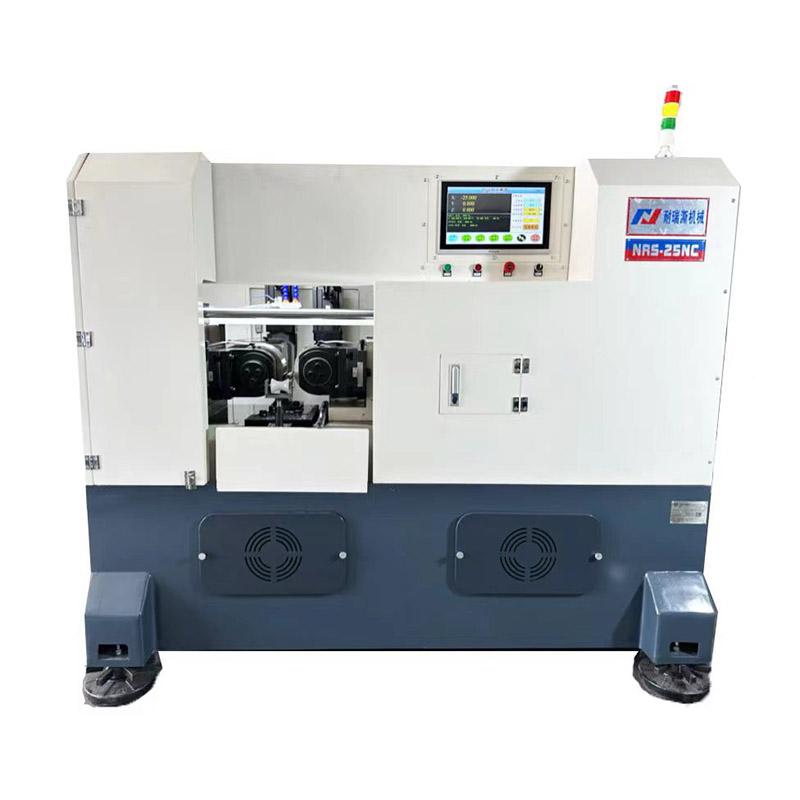
A smarter workflow is simple, but it needs discipline. Instead of asking every supplier for the lowest price first, I would build the inquiry in stages.
- Define the exact part family and production goal.
- Prepare drawings, dimensions, materials, and target output.
- Clarify whether standard threads are enough or special profiles are required.
- Ask which machine configuration is recommended and why.
- Confirm dies, accessories, automation, and consumables together.
- Review after-sales scope, training, and spare-parts support.
- Compare offers based on total suitability, not headline price alone.
This approach saves time because it reduces misunderstandings early. It also makes it easier to identify which supplier is actually thinking about your production needs and which one is simply pushing stock.
In practical terms, the right Thread Rolling Machine should feel like a production solution, not just a shipment item. That distinction matters.
What Questions Do Buyers Ask Most Often?
FAQ
-
Can one thread rolling machine handle multiple product sizes?
Yes, but the actual range depends on machine design, die setup, and the complexity of the product family. Buyers should confirm practical changeover capability, not just theoretical range. -
Is a thread rolling machine only for standard external threads?
No. Depending on the machine and tooling, manufacturers may also process knurling, grooves, tubular parts, and certain special thread forms. -
Should I choose CNC or hydraulic first?
That depends on whether your priority is flexible adjustment and programmability or stable, straightforward forming for more fixed production tasks. The answer comes from the application, not from trend alone. -
What information should I send to a supplier before asking for a recommendation?
Product drawings, material information, diameter and length range, thread form, required output, and any need for automation or special tooling are the most useful starting points. -
How do I know whether the lower-priced machine is actually a better deal?
You do not know until you compare support scope, included accessories, tooling assumptions, operating stability, and long-term maintenance impact. The cheapest quote is often not the lowest-cost solution. -
Why does support matter so much for this kind of machine?
Because successful thread rolling depends on machine settings, dies, material behavior, lubrication, and operator handling. Good support reduces trial-and-error and protects output consistency.
Why Is Long-Term Fit More Important Than a Low Initial Price?
A thread rolling purchase should solve a production problem, not create a new one. The right choice improves consistency, strengthens throughput, and gives your team a machine they can actually run with confidence. The wrong choice usually reveals itself later through adjustment headaches, unstable quality, and hidden operating costs.
That is why I would always judge a Thread Rolling Machine by its long-term fit with the product, the process, and the people who will use it every day. A supplier that can discuss machine structure, thread forms, related tooling, customization, and application details is far more valuable than one that only sends a price list.
If you are currently comparing thread rolling solutions for fasteners, rods, tubes, or special formed parts, DONGGUAN NERES HARDWARE MACHINERY CO.,LTD. is a name worth exploring further. A focused conversation around your drawings, materials, and production goals can save you from costly guesswork and move you toward a machine that genuinely supports your business. Contact us today to discuss your application, request a tailored recommendation, and find the thread rolling solution that matches your production plan more precisely.
Previous:No News